

What Are Psychedelic Mushrooms?
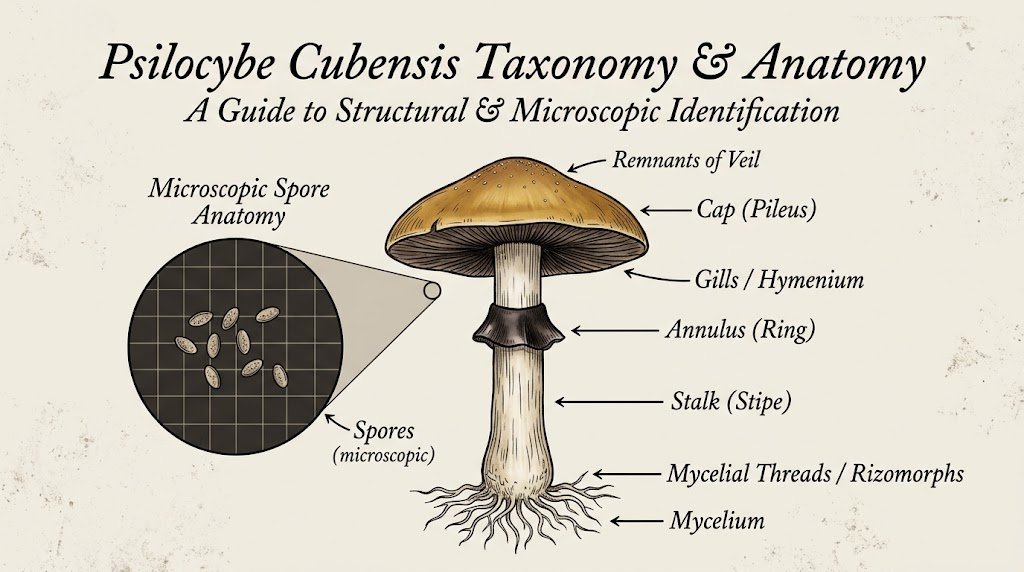
Understanding what are psychedelic mushrooms requires studying active alkaloids like psilocybin and psilocin within fungal tissue. Consequently, researchers analyzing psilocybin fungi taxonomy observe distinct cellular patterns and spore print characteristics under microscopy. However, evaluating entheogenic mushroom genetics ensures that laboratory specimens remain properly isolated from wild mold spores. Furthermore, examining psychoactive spore profiles helps scientists identify specific structural traits across different fungal genera. Therefore, learning how natural hallucinogenic species develop provides fundamental baseline knowledge for modern academic research.
How Is Psilocybin Fungi Taxonomy Studied?
First, investigating psilocybin fungi taxonomy involves mounting non-fruiting spore samples onto sterile glass microscope slides. Moreover, researching what are psychedelic mushrooms reveals how environmental conditions influence pileus shape and spore density. Meanwhile, analyzing entheogenic mushroom genetics allows mycologists to trace ancestral lineages across global ecosystems. Additionally, studying psychoactive spore profiles under high-power magnification highlights distinct wall thickness variations. As a result, educational institutions rely on natural hallucinogenic species research samples for accurate morphological classification.
Evaluating Entheogenic Mushroom Genetics Samples
First, assessing entheogenic mushroom genetics requires sourcing clean, liquid-suspended spore solutions from verified cleanrooms. Next, asking what are psychedelic mushrooms encourages independent researchers to explore strict UK taxonomic research parameters. Besides, examining psilocybin fungi taxonomy helps enthusiasts differentiate between psilocybe varieties and non-active wild lookalikes. Therefore, evaluating psychoactive spore profiles protects researchers from accidental cross-contamination in laboratory environments. Ultimately, working with natural hallucinogenic species specimens guarantees clear and repeatable microscopic observations.
Storage Steps for Psychoactive Spore Profiles
First, preserving psychoactive spore profiles in temperature-controlled, light-protective environments maintains cellular integrity. In addition, keeping natural hallucinogenic species spore syringes away from heat prevents premature degradation. Meanwhile, reviewing what are psychedelic mushrooms educational guides reinforces the necessity of sterile laboratory handling procedures. Besides, storing psilocybin fungi taxonomy materials in sealed containers protects sensitive liquid suspensions against airborne pollutants. Consequently, consistent preservation protocols keep entheogenic mushroom genetics viable for long-term study.
Sourcing Natural Hallucinogenic Species Guidance in the UK
First, researching natural hallucinogenic species taxonomy through https://topofficialgenetics.co.uk/ guarantees access to verified educational resources. Furthermore, exploring psychoactive spore profiles data on our portal simplifies your search for sterile microscopy standards. Next, studying entheogenic mushroom genetics specifications ensures that your research aligns fully with regional legal frameworks. Besides, understanding psilocybin fungi taxonomy provides academic collectors with complete peace of mind. Consequently, UK research enthusiasts rely on top official genetics when investigating what are psychedelic mushrooms.
Discover detailed research guides and technical information answering what are psychedelic mushrooms legally at https://topofficialgenetics.co.uk/
. Our platform provides comprehensive insight into psilocybin fungi taxonomy, helping UK researchers evaluate entheogenic mushroom genetics under laboratory conditions. Explore psychoactive spore profiles standards and natural hallucinogenic species classification protocols online today.