

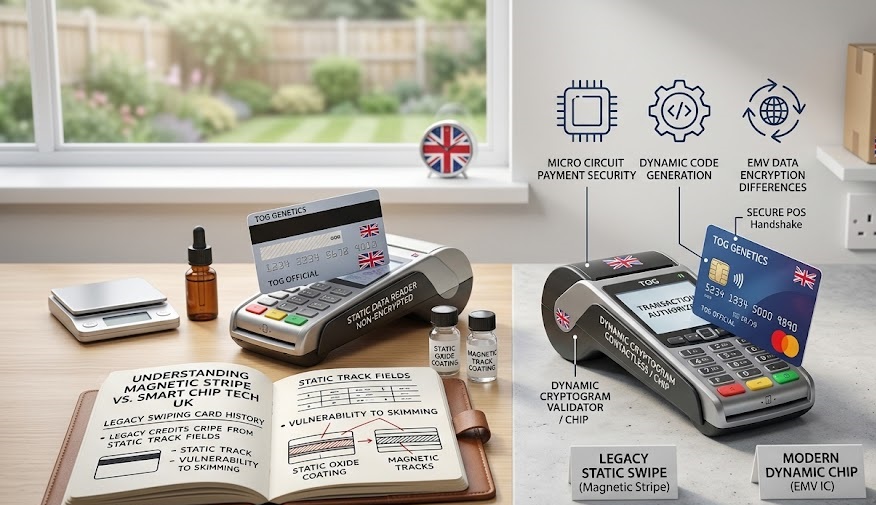
Understanding Magnetic Stripe vs. Smart Chip Tech: The Core Structural Shift
The technical architecture powering modern point-of-sale terminal verification across the United Kingdom is evolving rapidly. Specifically, modern financial institutions are fully deprecating older physical data storage formats to eliminate retail vulnerabilities. This detailed comparative manual focuses on magnetic stripe vs smart chip tech UK architectures that electronic banking systems utilize. For decades, simple black oxide strips handled global retail traffic without internal processing validation layers. However, modern infrastructure teams require dynamically encrypted pathways to stop fraudulent duplication instantly. By reviewing this legacy swiping card history, you grasp how original point-of-sale hardware organized user accounts. Furthermore, studying these advanced microcircuit payment security mechanisms highlights the complex code generation behind contactless EMV taps. Consequently, let us dive directly into the operational differences separating these primary card designs.
The Structural Architecture of Magnetic Stripe vs Smart Chip Tech UK Networks
To grasp modern point-of-sale security completely, you must first study how data moves from a card to a terminal reader. The two storage methods record and share your critical account details in entirely opposite ways. Therefore, analyzing magnetic stripe vs smart chip tech UK frameworks requires looking deeply at static versus dynamic broadcasting.
The Vulnerabilities of Static Magnetic Stripe Formats/legacy swiping card history
First, older magnetic tape options hold card details in a permanently fixed layout. The microscopic iron particles are arranged in rows to spell out your account number, expiration date, and country code. When you run the card through a swipe reader, the machine simply mirrors those static fields exactly. Consequently, malicious terminal skimmers can record this unprotected stream of numbers with ease. Once an attacker copies those static fields, they can imprint the data onto a counterfeit card seamlessly. This structural flaw explains why global banking networks have moved away from basic swiping methods completely.
The Cryptographic Security of Microcircuit Smart Chips
Alternatively, integrated circuit boards add an internal mini-computer directly into the plastic card. This metallic pad powers up instantly whenever it touches a modern terminal slot or contactless antenna field. Instead of broadcasting static data, the microchip runs complex internal mathematical equations to create a completely unique transaction code for every single purchase. Therefore, an intercepted code is entirely useless to a hacker, because it cannot be recycled for a second transaction. Because maximum defense is vital for point-of-sale systems, this dynamic encryption remains the gold standard for global trade. legacy swiping card history
EMV Data Encryption Differences: Eradicating POS Retail Vulnerabilities/legacy swiping card history
Modern point-of-sale architectures depend on active communication handshakes to verify that a card is genuine. Every single transaction requires a precise multi-step authentication sequence to stop automated cloning tools completely. microcircuit payment security mechanisms
Processing the Dynamic Cryptogram Handshake/microcircuit payment security mechanisms
First, the dynamic terminal handshake begins when the card reader injects a localized electric current into the microchip. The chip immediately processes this incoming terminal data using its internal cryptographic key array. Next, it sends back a highly secure, one-time digital signature to authorize the exact purchase amount requested. This localized puzzle ensures that your actual private account keys never travel across the store’s network cables during checkouts. Consequently, this design eliminates the possibility of data harvesting even if the main merchant terminal is compromised. microcircuit payment security mechanisms
The Global Transition Away from Swiping Rails
Conversely, older swiping terminal architectures lack any form of active communication or mutual hardware validation. The terminal reads the magnetic fields passively, trusting the incoming data string completely without requiring a dynamic confirmation loop. To fix this massive problem, international credit networks have shifted the financial liability for retail fraud onto slow merchants who refuse to upgrade their hardware. As a result of this policy, businesses across Britain have rapidly installed smart terminals to protect their operational budgets. Thus, this massive commercial push has successfully reduced retail counterfeiting rates to historic lows. EMV data encryption differences
Fraud Prevention, Tokenization, and Point-of-Sale Best Practices
Because modern payment systems process millions of high-speed transactions daily, maintaining strict individual tracking rules keeps your financial data perfectly safe.
- Mandatory PIN Entry Verification: Pair your chip transactions with a personal identification number to ensure lost cards cannot be used by strangers.
- Regular Terminal Inspection Habits: Check the front of retail card slots for loose plastic attachments or strange components before inserting your card.
- Enabling Contactless Tap Protections: Use digital wallets to mask your physical chip details behind temporary, single-use security tokens.
How to Securely Deploy Certified Payment Terminals Online
Navigating the contemporary enterprise retail hardware space requires maximum attention to source code verification and hardware integrity. Because unverified terminal suppliers often use modified software backdoors, relying on accredited distribution networks is vital for systemic safety.
Verifying Enterprise POS Hardware Certificates
To protect your professional retail engineering budget, always choose card reading hardware that carries official PCI security standards certification labels. Authentic international terminal manufacturers explicitly list the precise cryptographic standards built into their operating kernels. Furthermore, they guarantee absolute freedom from unverified middleware platforms or third-party data collection modifications. In contrast, low-tier generic card readers never offer this strict manufacturing data clarity. Therefore, verifying these hardware specifications ensures you invest in authentic, master-processed science. EMV data encryption differences
Fully Encrypted Merchant Portals and Secure Terminal Delivery/EMV data encryption differences
Finally, premium financial retail management portals treat your transactional merchant history with absolute confidentiality. For this reason, look for web applications that feature fully encrypted communication pathways, including private diagnostic links or certified secure hosting. Additionally, confirm that your physical point-of-sale terminal hardware arrives in heavy-duty, completely tamper-evident, unbranded boxes. As a result, your high-value corporate processing assets arrive safely, swiftly, and with absolute privacy maintained from the factory floor to your retail storefront.