

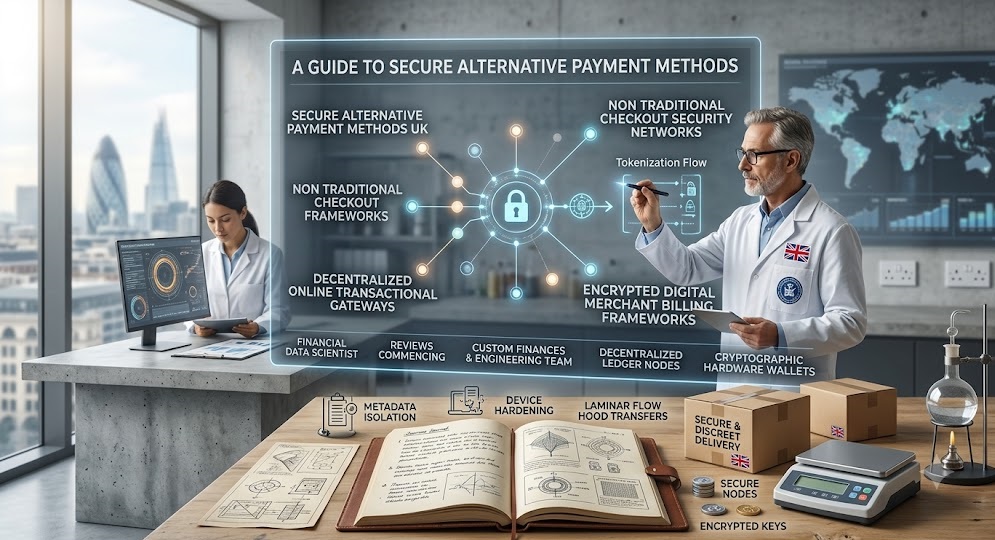
A Guide to Secure Alternative Payment Methods: Redefining E-Commerce Safety
The digital commerce ecosystem across the United Kingdom is evolving at an incredibly rapid rate. Specifically, modern web merchants are looking past traditional credit cards to integrate highly advanced consumer data shields. This detailed operational manual provides an exhaustive breakdown of the secure alternative payment methods UK businesses utilize daily to safeguard revenue. Today, online retail operations face unprecedented threats from data sniffing scripts and automated identity theft networks. Therefore, applying multi-layered digital transactional defenses is a vital strategy for protecting your brand’s bottom line. By mastering these strict non traditional checkout security networks, merchants easily remove common checkout friction points. Furthermore, observing these modern decentralized online transactional gateways helps security teams block structural transaction interception completely. Consequently, let us analyze the core system mechanics that make hidden web commerce possible.
The Infrastructure of Secure Alternative Payment Methods UK Ecosystems
To build a truly resilient electronic retail network, you must first master how data travels from a customer’s browser to the processing host. Different software architectures handle your transaction records in completely unique ways. Therefore, maintaining consistent secure alternative payment methods UK frameworks requires a deep look at localized open banking pathways.
The Mechanics of Account-to-Account Open Banking Transfers/decentralized online transactional gateways
First, open banking networks allow buyers to pay for online goods directly from their personal banking apps. This technique eliminates the need to enter static credit card numbers on third-party web forms. When a customer initiates a checkout, the platform securely routes them straight to their official institutional portal. Consequently, the merchant never sees, handles, or records vulnerable user account credentials. This design ensures that a subsequent merchant database breach cannot compromise the consumer’s primary card numbers. As a result, direct bank transfers provide an exceptionally strong security layer for high-volume corporate shopping portals. decentralized online transactional gateways
Deploying Encrypted Digital Merchant Billing Frameworks
Additionally, utilizing advanced encrypted digital merchant billing frameworks keeps sensitive transaction parameters fully masked during transit. These systems wrap critical payment payloads in heavy cryptographic layers right at the moment of generation. This method prevents unauthorized server plugins from capturing clean-text banking details as they stream through local networks. Therefore, using robust cryptographic pipelines ensures perfect data isolation regardless of the underlying network environment. Thus, implementing these protocols remains a primary benchmark for contemporary digital asset architecture. encrypted digital merchant billing frameworks
Non Traditional Checkout Security Networks: Stopping Database Interception
Modern merchant protection relies heavily on dynamic tokens to stop automated scanning scripts from capturing valuable account profiles during checkouts. Every single digital transaction requires unique mathematical signatures to pass verification checks cleanly. decentralized online transactional gateways
Tokenization and Dynamic Transaction Masking/secure alternative payment methods UK
First, using standard plastic cards online creates a permanent trail of static numbers that malicious software can exploit repeatedly. To eliminate this severe structural threat, modern alternative systems replace real account data with randomized digital tokens. The processing gateway generates a single-use string of characters that remains valid only for that specific invoice amount. Consequently, an intercepted token is entirely useless to a hacker because it cannot be recycled for a second purchase. This structural barrier explains why forward-thinking enterprises are rapidly adopting automated tokenization pipelines across Europe.
Zero-Knowledge Proofs in Alternative Commerce Channels
Alternatively, advanced software engineering teams are successfully deploying zero-knowledge mathematical proofs within alternative clearing networks. These complex cryptographic protocols allow a consumer’s wallet to verify that sufficient funds exist for an order. Concurrently, it shields the user’s total balance and past transaction log from the merchant’s view. This technique maintains absolute balance privacy while ensuring flawless transaction validation across distributed processing nodes. Because data exposure is a massive corporate liability today, these mathematical tools represent the absolute future of digital payment infrastructure. secure alternative payment methods UK
Endpoint Hardening, Gateway API Patching, and Integration Best Practices
Because modern e-commerce systems handle millions of high-speed transactions daily, maintaining strict individual tracking rules keeps your financial data perfectly safe.
- Mandatory Two-Factor Biometric Verification: Require users to confirm alternative payment transfers using local device fingerprint or facial scans.
- Continuous API Endpoint Monitoring: Audit your checkout gateway connection points daily to detect unverified code modifications early.
- Isolated Sandbox Testing Routines: Test all new alternative payment software modules inside isolated environments before launching them to live traffic.
How to Securely Deploy Alternative Payment Processing Systems Online
Navigating contemporary financial software spaces requires maximum attention to source code verification and platform architectural safety. Because unverified open-source payment plugins often host hidden security flaws, relying on accredited developer networks is vital. non traditional checkout security networks
Verifying Gateway Code Integrity Certificates
To protect your professional e-commerce engineering budget, always download processing modules from platforms that display valid security certificates. Authentic international gateway development teams publish their official public signing keys openly on secure code repositories. Furthermore, they guarantee absolute freedom from unverified analytics code or hidden data tracking extensions. In contrast, unverified low-tier integration scripts never offer this explicit level of manufacturing data clarity. Therefore, checking these parameters ensures you invest in authentic, master-processed science. encrypted digital merchant billing frameworks
Fully Encrypted Merchant Portals and Discretion-Focused Shipping/encrypted digital merchant billing frameworks
Finally, premium alternative payment management portals treat your transactional merchant history with absolute confidentiality. For this reason, look for web applications that feature fully encrypted communication pathways, including private diagnostic links or certified secure hosting. Additionally, confirm that your physical e-commerce server components or hardware keys arrive in heavy-duty, completely tamper-evident, unbranded boxes. As a result, your high-value corporate processing assets arrive safely, swiftly, and with absolute privacy maintained from the factory floor to your data center.