
The History of Botanical Alkaloids: An Analytical Overview of Plant Chemistry
The academic research landscape exploring specialized plant metabolites across the United Kingdom is currently advancing at a remarkable pace. Specifically, contemporary biochemical laboratories are looking past basic organic sorting to evaluate complex molecular heritages instead. This comprehensive industrial chronicle tracks the fascinating botanical alkaloids history UK scholars review with deep academic precision. For centuries, traditional healers utilized bitter vegetable infusions without knowing the specific active molecules driving those physiological responses. However, modern scientific breakthroughs eventually allowed investigators to separate pure crystalline fractions from raw vegetation safely. By studying this rich plant nitrogenous compounds origins timeline, you understand how early pharmacists categorized natural therapeutic agents. Furthermore, analyzing these foundational organic plant base discoveries highlights the evolution of modern pharmaceutical synthesis pathways. Consequently, let us dive directly into the major chronological milestones that shaped this essential scientific discipline.
Early Isolations: Tracing the Botanical Alkaloids History UK Foundations
To grasp the complexity of modern phytochemistry completely, we must first look at how early researchers cracked open complex organic structures. The initial transition from crude herbalism to rigorous laboratory science required entirely new processing methodologies. Therefore, exploring the botanical alkaloids history UK archive requires a deep inspection of early nineteenth-century achievements.
The Pioneering Breakthroughs of Friedrich Sertürner/plant nitrogenous compounds origins
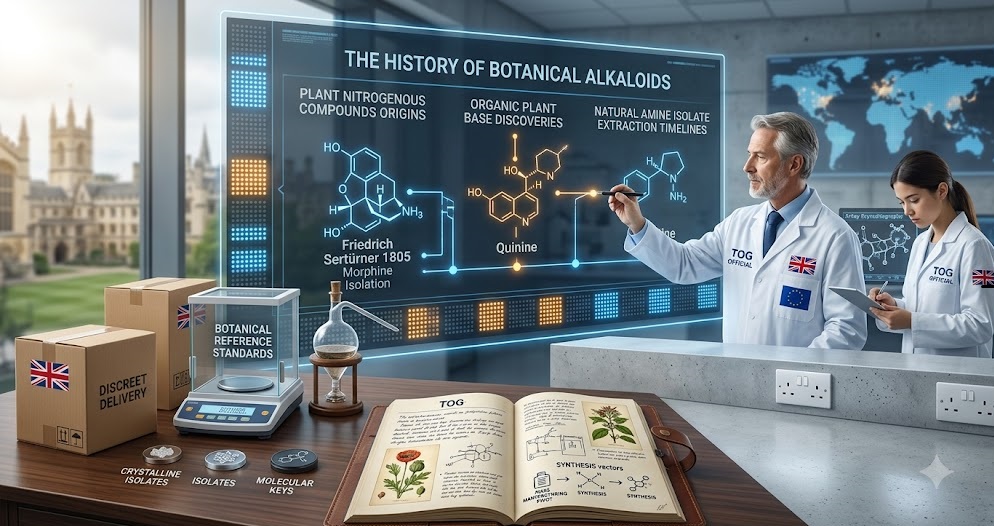
First, the formal scientific timeline began in the early 1800s when a dedicated German pharmacist isolated the very first pure alkaloid from opium. He successfully separated a white, crystalline organic base and proved it held the primary sedative power of the plant. Consequently, this magnificent achievement shattered the old belief that plants only functioned as whole organic mixtures. This discovery prompted chemists throughout western Europe to hunt for similar active nitrogenous chemicals in other therapeutic herbs. As a result, laboratories rapidly identified pure caffeine, quinine, and strychnine within a few short decades. plant nitrogenous compounds origins
The Development of Standardized Chemical Terminology
Additionally, the expanding variety of these nitrogen-rich compounds forced the global scientific community to build a unified naming system. Chemists coined the specific umbrella term “alkaloid” to describe these bitter, nitrogenous molecules because they reacted like organic bases against acids. In Great Britain, progressive university researchers eagerly adopted these new European laboratory systems to study domestic flora safely. This systematic naming process helped transform unverified folk medicine into a highly structured branch of organic chemistry. Thus, regularizing terminology laid the groundwork for modern natural amine isolate extraction timelines.
Organic Plant Base Discoveries: Mapping the Shift to Industrial Pharmacy
As the industrial revolution gained momentum, the ability to isolate pure vegetable compounds shifted from small laboratory experiments to massive commercial operations. This manufacturing transition completely altered how physicians treated widespread global diseases. natural amine isolate extraction timelines
Mass Manufacturing and the Battle Against Tropical Disease
First, the large-scale isolation of pure quinine from cinchona bark became a critical geopolitical turning point during the nineteenth century. Because malaria devastated exploration groups and trading fleets constantly, securing stable supplies of this protective alkaloid was vital. European manufacturing firms built large-scale acid extraction vats to process tons of raw bark weekly. Consequently, this industrial optimization dropped the cost of pure medicine dramatically, saving countless lives across distant global territories. This commercial success proved that isolating individual plant bases was highly profitable for corporate enterprises.
The Synthesis Pivot and Structural Identification
Alternatively, relying entirely on raw agricultural imports created massive supply bottlenecks during international trade blockades. To bypass these limitations, twentieth-century researchers focused heavily on mapping the exact atomic rings of these complex structures. Armed with advanced X-ray crystallography tools, scientists finally visualized how carbon, hydrogen, and nitrogen atoms bonded together inside the plant cells. This structural clarity allowed chemical laboratories to synthesize identical artificial replicas without using any raw agricultural material. Therefore, this monumental step detached pharmaceutical production from vulnerable crop cycles forever. natural amine isolate extraction timelines
Laboratory Safety, Modern Chromatography, and Extraction Best Practices
Because many active plant bases carry immense biological potency, maintaining strict laboratory handling guidelines protects scientific staff from accidental exposure. Proper chemical workflows keep experimental data pristine.
- Continuous Fume Hood Ventilation: Always process organic solvent extractions inside certified negative-pressure hoods to avoid breathing harmful fumes.
- High-Performance Liquid Chromatography: Use advanced digital column scanning to separate closely related molecular bands without damaging delicate samples.
- Rotary Evaporator Vacuum Recovery: Reclaim volatile processing alcohols gently using low-heat vacuum systems to protect your overall operational budget.
How to Securely Source Certified Botanical Reference Standards Online
Navigating modern international biochemical supply channels requires strict attention to batch purity verification and customer data confidentiality. Because unverified open-market chemical brokers often supply degraded samples, choosing accredited distribution networks is vital.
Checking Third-Party Analytical Testing Certificates
To safeguard your institutional research budget, always select analytical suppliers that publish complete testing data for every chemical batch. Authentic international supply platforms explicitly include clear mass spectrometry charts and nuclear magnetic resonance profiles with their inventory lists. Furthermore, they guarantee absolute freedom from synthetic impurities, heavy metals, or residual industrial counter-ions. In contrast, unverified low-tier suppliers never offer this strict data transparency. Therefore, checking these parameters ensures you invest in authentic, master-processed science. organic plant base discoveries
Fully Encrypted Checkouts and Unbranded Document Delivery/organic plant base discoveries
Finally, premium global science logistics companies treat your transactional data with maximum professional confidentiality. For this reason, look for web portals that feature fully encrypted checkout gateways, such as private digital billing networks or verified bank links. Additionally, confirm that they deliver physical reference standards in thick, completely plain, unbranded boxes. This secure shipping method protects your delicate research cargo from unnecessary external scrutiny during transit. As a result, your high-value laboratory assets arrive safely, swiftly, and with absolute privacy maintained from the warehouse to your facility.