

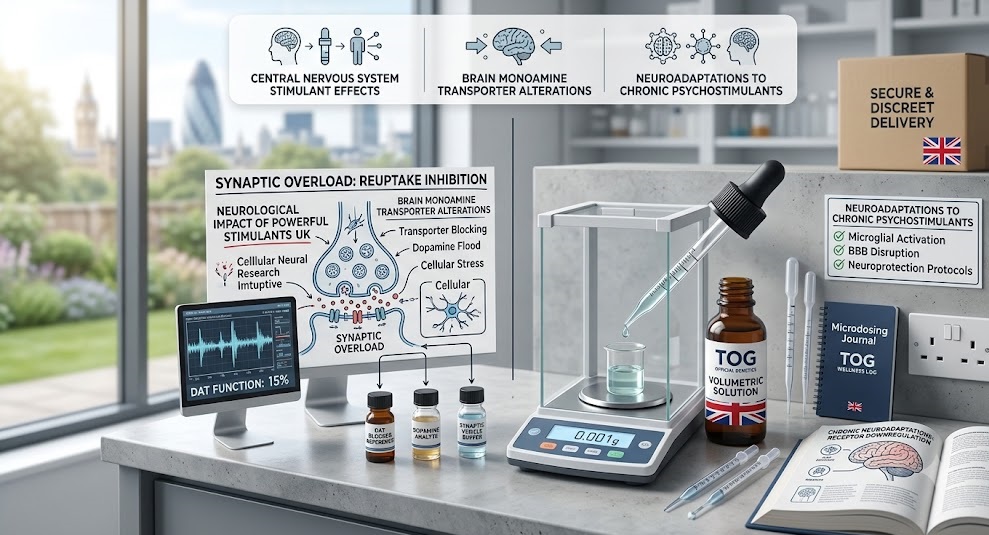
The Neurological Impact of Powerful Stimulants: A Clinical Neurobiology Manual
The medical research framework tracking chemical interactions within cerebral pathways across the United Kingdom is expanding rapidly. Specifically, modern neurobiological laboratories look past simple behavioral assessments to map intricate cellular adaptations instead. This comprehensive scientific manual delivers an exhaustive breakdown of the neurological impact of powerful stimulants UK clinical teams trace in academic studies. Today, the human brain faces deep structural changes when exposed to high-affinity monoamine reuptake inhibitors. Therefore, understanding these microscopic cellular transformations helps healthcare groups build superior recovery protocols. By studying these documented central nervous system stimulant effects, clinicians can treat receptor fatigue more effectively. Furthermore, exploring these fundamental brain monoamine transporter alterations reveals how synaptic clearance rates shift under chemical stress. Consequently, let us look directly into the primary neurochemical mechanics that dictate these profound brain alterations.
Cellular Overload: Tracking the Neurological Impact of Powerful Stimulants UK Pathways
To understand synaptic exhaustion completely, you must first study how neurotransmitters accumulate within the synaptic cleft. The entire communication system relies on perfect chemical balance to prevent neurotoxic stress. Therefore, analyzing the neurological impact of powerful stimulants UK networks monitor requires a strict inspection of vesicular dumping.
The Mechanism of Transporter Reversal and Reuptake Inhibition/central nervous system stimulant effects
First, classical psychostimulants target the delicate dopamine transporter proteins that clear active signals from the synapse. Under normal conditions, these vacuum-like structures pump loose neurotransmitters back inside the sending cell seamlessly. However, high-potency chemical compounds bind tightly to these doors, locking them completely shut. Consequently, massive waves of dopamine, norepinephrine, and serotonin build up inside the synaptic channel instantly. This structural traffic jam triggers intense, continuous electrical signaling throughout your reward circuitry. As a result, this baseline hyper-stimulation causes rapid physical energy spikes while simultaneously depleting your natural chemical reservoirs. central nervous system stimulant effects
Neuroadaptations to Chronic Psychostimulants and Receptor Downregulation
Additionally, the brain actively fights this unnatural surge of neurotransmitters by lowering its total receptor count over time. Because the postsynaptic membrane faces continuous chemical blasting, it pulls vital binding sites back inside the cell walls to protect itself. This protective self-defense mechanism is known in clinical medicine as receptor downregulation. Consequently, when the external compound leaves the body, the remaining natural neurotransmitters cannot find enough open receptors to spark a signal. This structural drop leads directly to severe mood drops and intense cognitive fatigue. Thus, chronic chemical exposure leaves the brain temporarily unable to register normal, everyday pleasure signals. central nervous system stimulant effects
Brain Monoamine Transporter Alterations: Overcoming Microscopic Toxicity
Modern neurological research depends on advanced scanning tools to map out hidden physical damage within long-term axonal networks. Every single high-affinity exposure session introduces unique structural stress that changes the physical framework of your grey matter. brain monoamine transporter alterations
Microglial Activation and Localized Neuroinflammation/brain monoamine transporter alterations
First, excessive accumulation of dopamine inside the synaptic channel leads to a hazardous process called auto-oxidation. This chemical breakdown creates highly reactive free radicals that damage fragile local cell membranes. To clean up this microscopic debris, the brain’s internal immune defenders, known as microglia, switch into an aggressive, hyper-active state. While this quick immune response helps clear damaged cells early on, chronic activation creates a steady stream of inflammatory chemicals across your cerebral tissue. Consequently, this persistent swelling harms neighboring healthy neurons, slowly reducing overall brain efficiency. This structural damage explains why prolonged stimulant exposure often leads to measurable memory gaps and attention difficulties.
Blood-Brain Barrier Disruption Under Thermal Stress
Alternatively, high-affinity psychostimulants can disrupt your core biological temperature control centers, causing severe systemic overheating. This dangerous rise in core body temperature directly attacks the delicate cellular lining of your blood-brain barrier. Under healthy conditions, this tight cellular wall prevents harmful blood-borne toxins from leaking into your sensitive brain tissues. However, excessive thermal stress causes these tight cellular seals to loosen and leak open. Concurrently, circulating systemic waste products slip past the broken barrier, triggering widespread localized swelling. Because keeping this barrier intact is vital for cognitive survival, managing these thermal spikes remains a primary focus for emergency medical personnel. neuroadaptations to chronic psychostimulants
Neuroprotection, Diagnostic Tracking, and Rehabilitation Best Practices
Because navigating severe neurochemical depletion requires immense medical focus, implementing strict neurological support routines shields fragile brain networks from permanent breakdown.
- Targeted Antioxidant Support Systems: Deploy high-dose free radical scavengers like alpha-lipoic acid to neutralize cellular oxidation during acute recovery phases.
- Continuous Electroencephalogram Monitoring: Track real-time brainwave frequencies to detect silent seizure patterns caused by hyper-excited network states.
- Sustained Neurotrophic Factor Enhancement: Encourage natural physical repair pathways through structured aerobic exercise, which naturally elevates brain-derived neurotrophic factor.
How to Securely Source Certified Neuroscience Research Publications Online
Navigating modern international academic supply databases requires strict attention to platform data security and customer information confidentiality. Because unverified open-access document mirrors frequently host deceptive phishing scripts, relying on accredited networks is vital for enterprise safety.
Verifying Institutional Journal Access Certificates neuroadaptations to chronic psychostimulants
To protect your academic data assets, always access scientific publications through platforms that display valid secure socket layer validation seals. Authentic international medical publishers explicitly display their verified corporate credentials right inside the browser address bar. Furthermore, they guarantee that all document download pathways use modern, high-grade encryption to secure your institutional login data. In contrast, fraudulent copycat platforms never offer these authentic validation markers. Therefore, verifying these simple technical parameters ensures you navigate authentic, secure web spaces safely.
Fully Encrypted Checkout Gateways and Private Shipping Protocols/neuroadaptations to chronic psychostimulants
Finalizing institutional text purchases requires data systems that treat your billing details with maximum professional confidentiality. For this reason, look for web stores that feature fully encrypted checkout gateways, such as private digital billing links or verified bank networks. Additionally, confirm that any physical medical reference manuals or lab tools arrive in thick, completely plain, unbranded packaging. This protective shipping method keeps third-party couriers from discovering the technical nature of your research cargo. As a result, your high-value laboratory assets arrive safely, swiftly, and with absolute privacy maintained from the warehouse to your facility.